Confusing a package marking with an ordering code can send the wrong part into a purchasing request. Record the full ordering code, the text printed on the component and the board reference separately, then connect them through manufacturer documentation.
This guide helps purchasing and maintenance readers turn an uncertain component identification into a record someone else can check. It belongs to the component documentation route; it does not establish authenticity or approve a replacement.
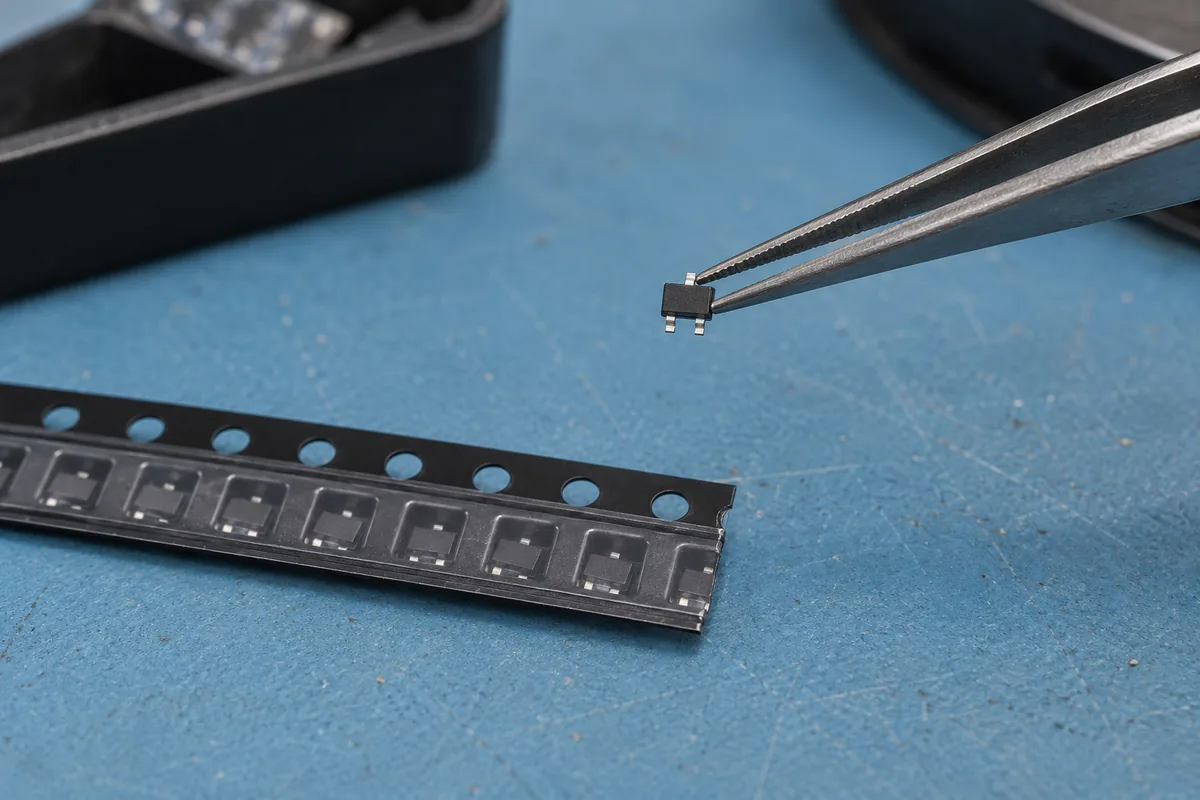
| Input or item | Typical value or source | Why it matters |
|---|---|---|
| Full ordering code | Manufacturer orderable-part table and purchase record | Identifies the requested variant |
| Package marking | Unedited observation and manufacturer lookup | Provides a search input, not a complete order |
| Board reference | Board drawing or assembly record | Locates the component on that assembly |
| Document version | Datasheet identifier and revision | Lets another reader repeat the lookup |
| Unresolved difference | Named question and evidence owner | Keeps a candidate from becoming a confirmed physical identity |
Keep the three identifiers in separate fields
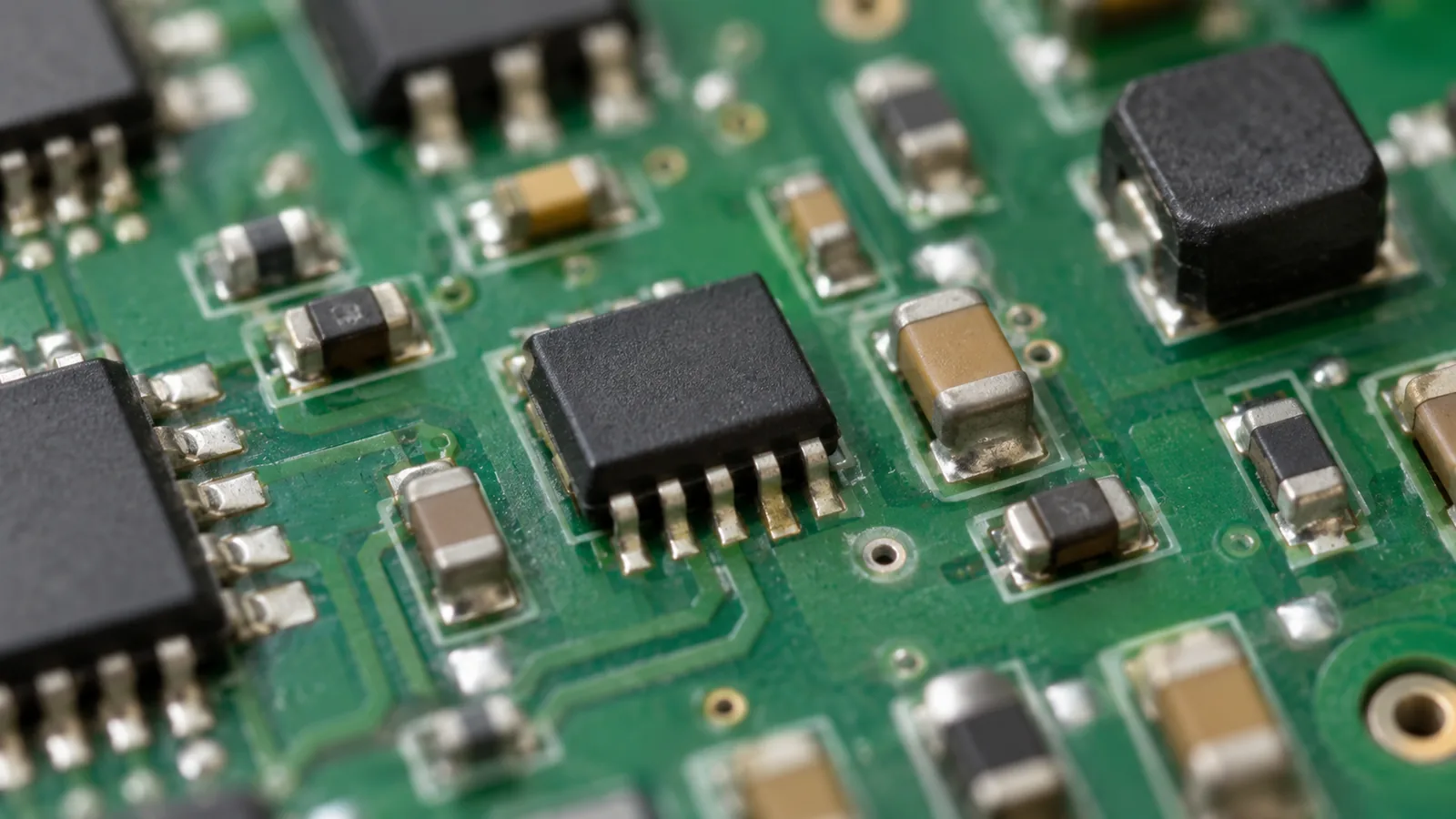
An ordering code identifies a purchasable variant, a package marking is text on the device, and a board reference locates a position in the assembly documentation. Treat these as different records even when a short string looks familiar.
For this checklist, a board reference means the identifier assigned to a component position in the board’s own drawing or assembly record. Its meaning comes from that record. Copy its spelling without trying to decode it as a semiconductor ordering code. A package marking means the observed text on the component body. A full ordering code means the manufacturer identifier for the exact orderable variant.
TI’s part-marking lookup offers separate searches for device markings and TI part numbers. Its SN74LVC1G14 datasheet has a package-option addendum with separate columns for orderable part number, package and part marking. Those are useful original-document examples of the distinction. They do not supply a universal suffix dictionary for other manufacturers.
Use the sourcing evidence route when the question changes from identifying an object to documenting the origin of a purchased batch.
Takeaway: Keep what you observed, where you observed it and what the manufacturer calls the variant in different fields.
Build the identification record before searching
Start with the exact observed text and its location; add a candidate ordering code only after finding supporting documentation. This preserves the difference between an observation and a lookup result.
| Record field | What to enter | Evidence to retain |
|---|---|---|
| Assembly identity | Equipment and board revision from available records | Drawing or existing asset record |
| Board reference | Exact position identifier | Drawing reference or permitted photograph |
| Observed marking | Text as seen, including uncertain characters | Original observation, with uncertainty visible |
| Manufacturer candidate | Name supported by the marking or existing documentation | Source of the candidate name |
| Ordering-code candidate | Complete string returned by the relevant manufacturer source | Lookup result and source document |
| Query record | Search mode, exact input and time checked | Original result, without rewriting the observation |
| Document identity | Title, identifier, revision and URL | Source file or retained document reference |
| Addendum identity | Separate addendum date and exact table row | Package drawing, marking entry and relevant footnotes |
| Candidate conditions | Package description and applicable drawing | Unknown fields explicitly unresolved |
| Resolution | Candidate correspondence found, or still unresolved | What was checked, reviewer and unresolved-question owner |
An unreadable character should remain unreadable in the observation field. A separate candidate field can explain the possible reading. Do not silently replace it with the character that produces the most convenient search result. The record remains useful even if the search produces no reliable match.
Preserve the lookup evidence: Original observation · Search mode and input · Document revision · Addendum date and row · Unresolved question.
The industrial application records route provides the equipment context for handing an unresolved board identity to the responsible service team. No component removal is needed to use this documentation checklist.
Common mistake: Editing the observation to match a likely part number, then presenting that edited string as the original marking.
Takeaway: Preserve uncertain characters and the original observation alongside each candidate.
Check the full orderable row and its document version
Use the complete manufacturer table row to check a candidate; a match to the family name alone leaves variant details unresolved. Preserve the row and the document version that supported it.
The cached TI example is SN74LVC1G14, document SCES218AA, revised October 2025, with a package-option addendum dated October 6, 2026. Section 10 notes that addendum information can change independently of the datasheet revision. Keep both dates in the record.
The following is a document-reading example from Addendum-Page 1, not an observation of an actual component or a purchase recommendation:
| Full ordering code | Package in that row | C14F marking entry in that row |
|---|---|---|
| SN74LVC1G14DBVR | SOT-23 (DBV) | C14F is among the listed marking alternatives |
| SN74LVC1G14DBVRE4 | SOT-23 (DBV) | C14F is the listed marking |
The shared C14F entry shows why a top mark alone does not select a unique full ordering code. Read Part marking footnote (6) on Addendum-Page 3 with the row: TI notes that additional marks can carry logo, lot-trace or environmental information, and gives rules for alternative markings and indented continuation lines. Preserve the original table layout rather than treating extracted line breaks as separate marks. These are rules for this TI addendum, not a universal decoding convention.
A useful record names the row’s package description, corresponding drawing and printed-marking entry. If an existing purchase record omits a suffix, write that omission as a question. Do not fill it from another manufacturer’s naming convention. For a new component request, the person responsible for the approved bill of materials should resolve the complete identifier.
Once a candidate’s documentary correspondence is supported, continue through component specification documentation to record the electrical conditions. For an installed control board, retain the assembly revision in the embedded control documentation context as well: a known component name does not identify the whole board configuration.
Takeaway: A supported family name is a starting point; the full orderable row is the variant record.
Decide what to do with mismatches
Record a mismatch as an open question with an owner, rather than deciding authenticity or compatibility from appearance. The output is a review request containing the evidence that failed to agree.
| Observation | Documentation question | Next record action |
|---|---|---|
| Marking produces several candidates | Which package and variant does the source associate with this marking? | Keep the alternatives and the source result |
| Purchase code differs from an assembly record | Is the record from the same board revision? | Ask the assembly-document owner |
| Manufacturer cannot be established | What evidence identifies the source of the device? | Leave manufacturer unresolved |
| Device text cannot be read | Can an approved existing photograph or record resolve it? | Preserve the uncertainty |
| Candidate is a different ordering code | Is an engineering substitution being proposed? | Move the question to replacement review |
The sourcing documentation route is the next step for purchase-document discrepancies. Keep that question separate from the equipment application and maintenance documentation, which concerns the assembly and its authorized service records.
Takeaway: A discrepancy creates a documented question; it does not create a verdict about the part.
When this does not apply
This record cannot authenticate a component, reconstruct an undocumented circuit or authorize substitution. Stop at the evidence boundary when the manufacturer, variant or assembly revision remains unresolved.
A matching top mark is not a provenance record. A complete ordering code is not evidence that an unknown board can accept that part. If the remaining question is purchase origin, follow sourcing evidence. If it is an equipment change, hand the record to the board or equipment owner.
Takeaway: Use the record to support a review, never as a certificate of authenticity or compatibility.
Methods and sources
This is an editorial documentation checklist based on TI’s public part-marking lookup and the SN74LVC1G14 original datasheet and package addendum, accessed October 8, 2026. It includes no component test, inspection result or current procurement recommendation. Tables explain record relationships and photos serve as examples; neither establishes actual device identity. The original documents are listed in the template’s Sources section.
Related reading
- Components — Locate the manufacturer document after preserving the identifiers.
- Sourcing — Record purchase origin separately from the identity lookup.