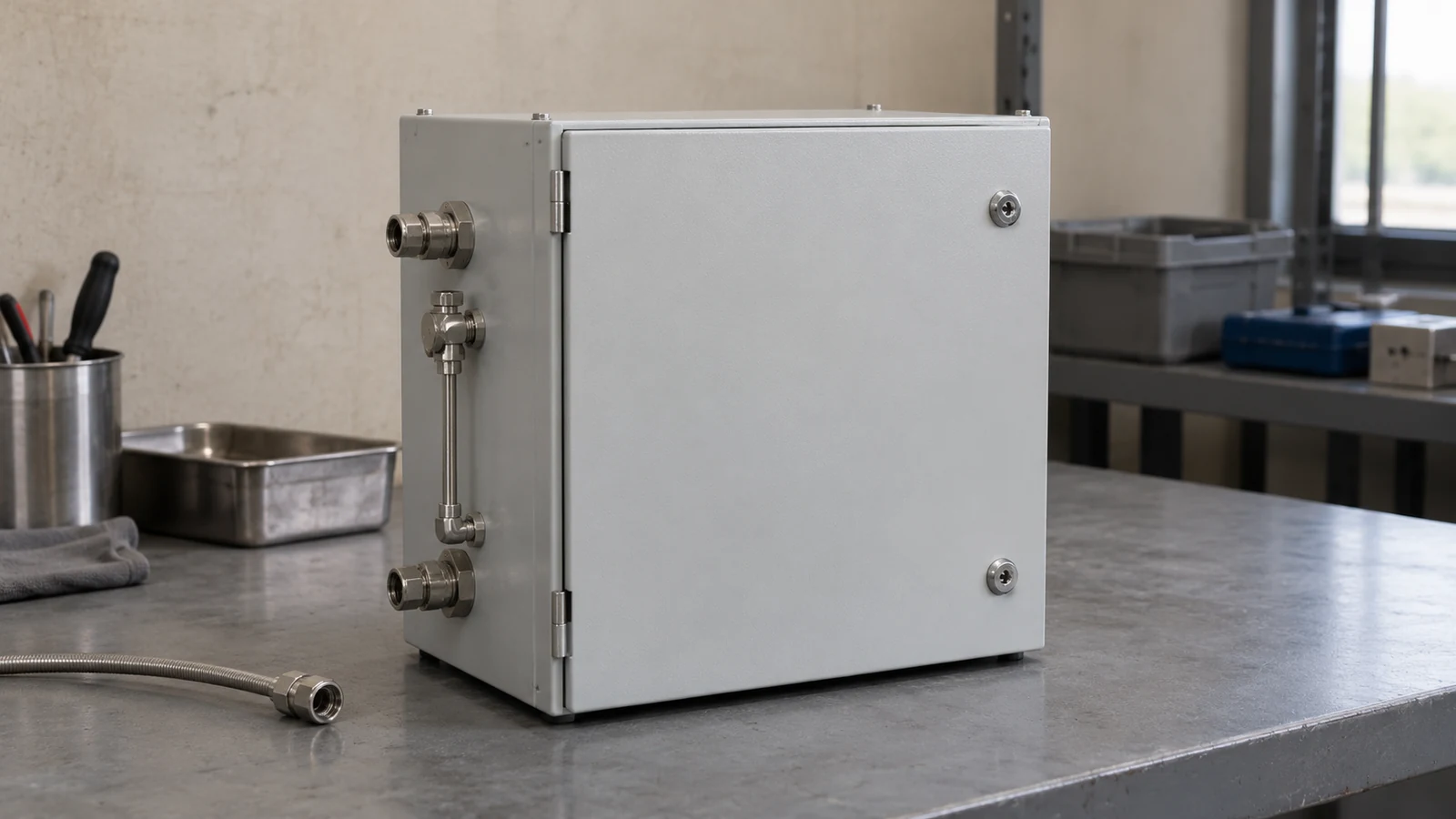
Decoding 'Ex db IIB+H2 T4 Gb': Emerson QX1400 Marking Boundaries
Read the QX1400 announcement markings by field. Separate reported ATEX and IECEx certification from expected North American approval and site acceptance.
Reference / 03
Define the loads and operating environment before comparing supplies or protection components. A power architecture starts with documented inputs, not a single wattage figure.
Reading route
This route connects the questions to the documentation you need. Start with the inputs, keep the source beside the claim, then follow the application.
Step 01
List each connected load, its documented supply requirements and the operating conditions specified by the equipment maker. Keep steady operation, startup behaviour and auxiliary loads as separate entries when the documentation distinguishes them. The aim is an input sheet that can be checked, rather than a single headline power figure without a defined system boundary.
Step 02
Compare supply documentation using the same conditions. Look for the manufacturer’s statements about the intended installation, ambient conditions, enclosure and load behaviour. Protection components also need to be examined in the context of the circuit they serve. Do not infer a complete equipment-level safety or compliance result from one component’s listed features.
Step 03
Unattended equipment can combine a controller, display, communications and mechanical peripherals. Record each interface and load from the relevant manuals before selecting an architecture. Electrical installation and safety-critical changes belong to qualified personnel working with the equipment documentation; this reference route helps organise the questions they need to resolve.
Before reviewing a kiosk supply, separate equipment and peripheral inputs with the self-service kiosk power-input checklist.
For gas-analyzer documentation, the QX1400 marking guide separates international protection fields from a US site approval decision.
Continue through component documentation, sourcing evidence, power requirements, control interfaces and equipment applications as your task requires.
These public documents show the scope of the checks described above. Device and equipment limits remain specific to each document; this route does not replace the relevant current manual. Accessed October 8, 2026.
Read the QX1400 announcement markings by field. Separate reported ATEX and IECEx certification from expected North American approval and site acceptance.
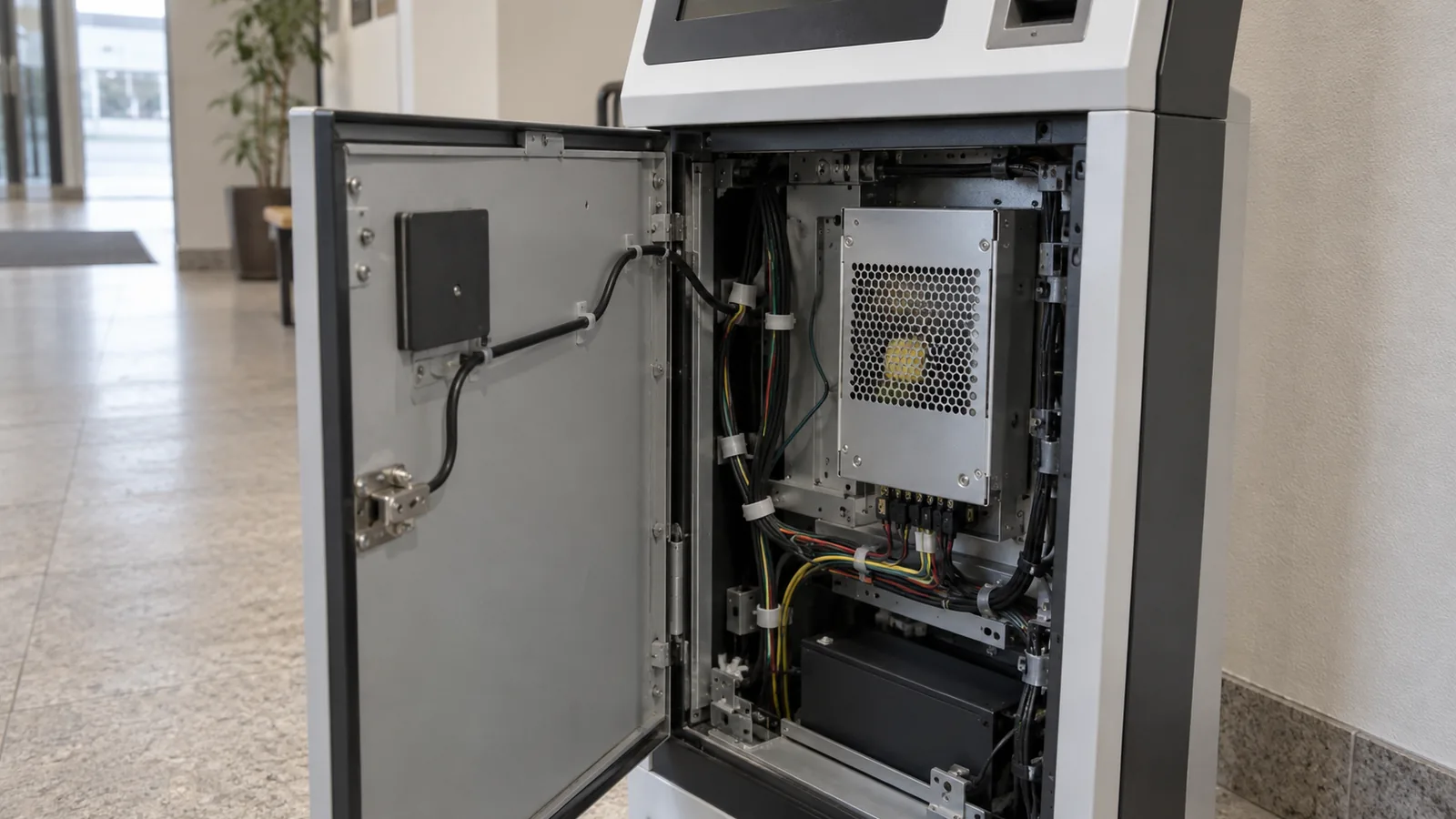
Separate complete-kiosk AC requirements from internal peripheral DC inputs. Build a document-based load record without assuming a universal power rating.