Reading a hazardous-area marking as a universal installation approval can cause costly redesign. Decode the fields in Emerson’s QX1400 announcement, then check the actual certificate, ordered configuration and site’s requirements before drawing an installation conclusion.
The string “Ex db IIB+H2 T4 Gb” describes several different protection attributes; it is not a translation into US Class I, Division 2 approval. Emerson’s October 1, 2026 announcement reports ATEX and IECEx certifications and says North American certification is expected by the end of 2026. That expectation is a future milestone, not evidence that the North American approval has been issued.
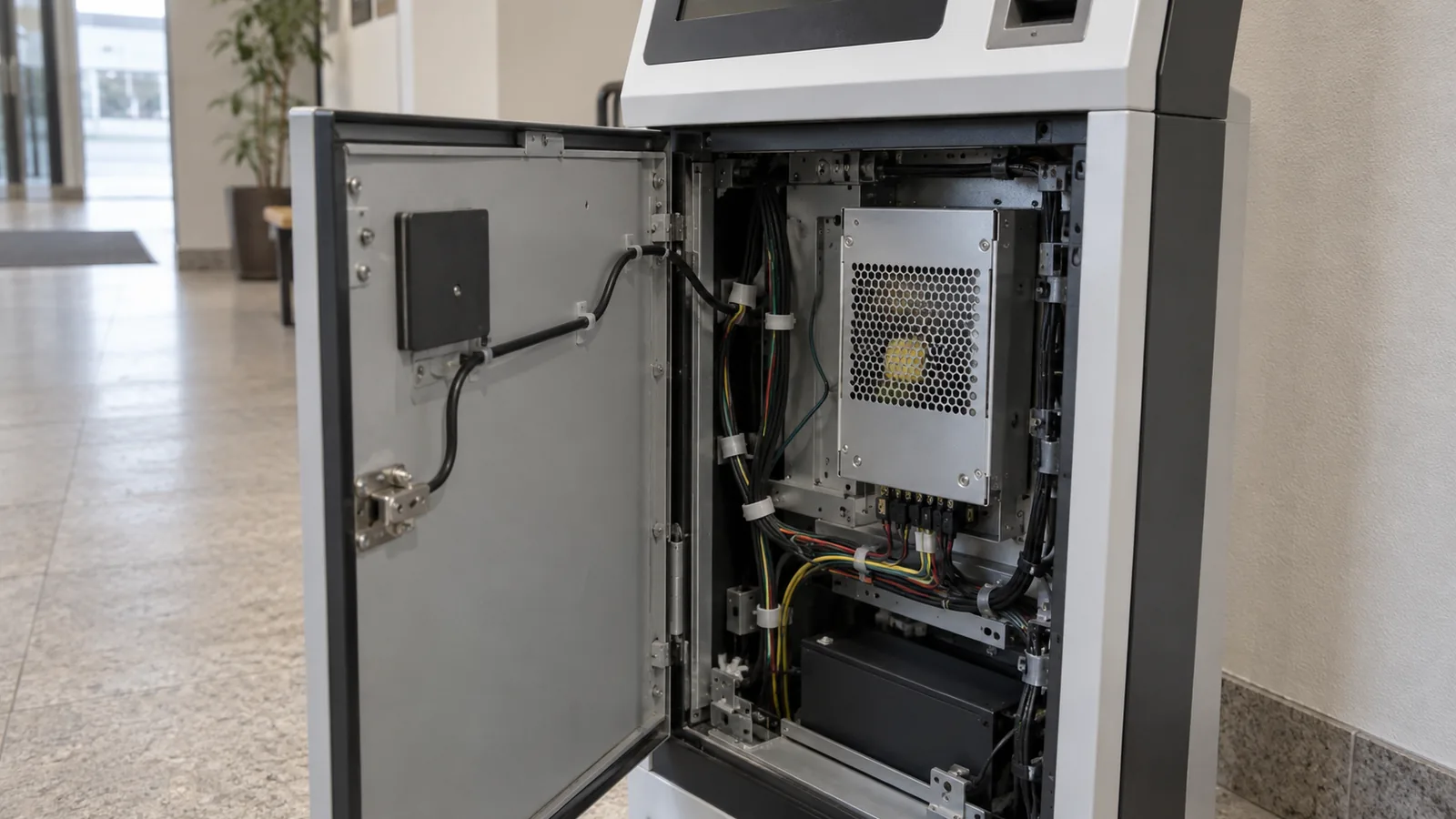
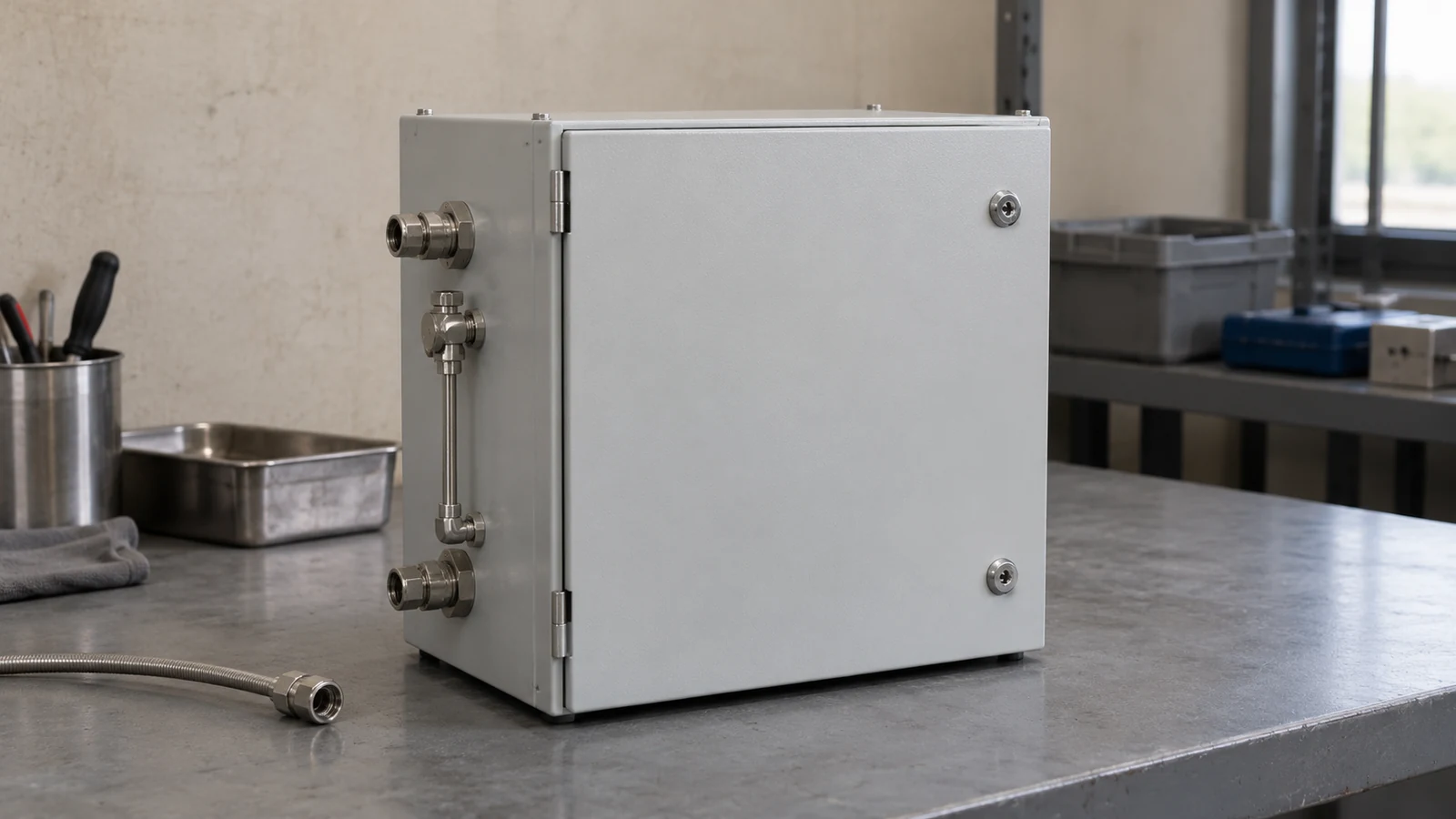
Images show generic objects as examples, not the named product, a supplier facility or a test record.
- Keep the ATEX and IECEx strings as separate source records.
- Distinguish protection technique, gas-group scope, temperature class and protection level.
- Match the current certificate to the exact analyzer configuration.
- Have the responsible project reviewer determine the site’s approval and installation route.
The power and protection route introduces the broader distinction between component documentation and equipment-level requirements.
What certification status does the announcement actually report?
The original release identifies the European and IECEx markings and describes North American certification as expected. Use that distinction in a review record. A reported certificate and a planned certification milestone require different supporting documents before they can support a project decision.
| System | Wording in the October 1 announcement | Status supported by that source | Next document |
|---|---|---|---|
| ATEX | II 2G Ex d IIB H2 T4 | Emerson reports certification | Applicable certificate, schedule and instructions |
| IECEx | Ex db IIB+H2 T4 Gb | Emerson reports certification | Current controlled certificate and its conditions |
| North American | Class I, Division 2, Groups B, C, D, T4 | Expected by end of 2026 | Issued approval evidence when available |
The table records the company’s announcement; it is not this publication’s verification of a QX1400 certificate or an approval for an installed system. The release’s claim about installation without a separate protective enclosure concerns certain hazardous areas, making the proposed location and enclosure scope specific review inputs.
Use the industrial equipment documentation route to keep the proposed location and assembly context beside the analyzer identity.
Takeaway: Keep “reported certification” and “expected certification” in different status fields.
How should you split the ATEX and IECEx markings into fields?
Read the strings as groups of attributes, rather than as a single grade of safety. The general explanations below draw on LCM Systems’ marking guide, Pepperl+Fuchs’ protection guide and IECEx’s standards list.
| Field | What it identifies | Reading boundary |
|---|---|---|
| ATEX II | Equipment group for applications other than mines | A group identifier, not US Class II |
| ATEX 2G | Category 2 for gas atmospheres | Do not substitute this for a site’s US classification |
| Ex | Explosion-protection marking prefix | It does not identify a jurisdiction’s approval by itself |
| d / db | Flameproof enclosure protection: contains internal explosion pressure and quenches flame propagation | The general protection guide lists db at the Gb protection level; preserve the exact form in the product document |
| IIB; H2 / +H2 | Gas subgroup and the stated hydrogen extension | Review the certificate’s exact scope; do not relabel it IIC |
| T4 | Temperature class; the general marking guide lists 135 °C as its maximum surface-temperature class value | Not an ambient-temperature limit or a sample-gas temperature specification |
| Gb | Gas equipment protection level, described as high protection in the general guide | Not a North American Division certificate |
The ATEX string in the release uses “d” and a separate “H2”; its IECEx string uses “db” and “+H2.” Preserve that transcription when matching each string to its applicable certificate. The protection guide’s table on printed page 13 relates db to Gb; this is terminology background, not a finding about the QX1400 certificate’s standard edition.
The part-identity and marking record explains why an observed marking and a document’s description belong in separate fields. Here that discipline prevents a quotation, announcement and actual nameplate from being treated as interchangeable evidence.
Common mistake: Reading T4 as a permitted room temperature, or turning IIB+H2 into unrestricted coverage of every IIC gas.
Takeaway: Decode each field for its own purpose and preserve the complete original string for certificate comparison.
Which certificate details belong next to the decoded marking?
Put certificate identity, revision or issue, current status, equipment scope and conditions next to the marking. IECEx’s own FAQ explains that its online certificate is the controlled version and that certificate status can change. A saved marketing page or an old PDF cannot replace checking that status.
| Review field | Evidence to collect | Owner of the unresolved question |
|---|---|---|
| Equipment identity | Ordered model/configuration and nameplate record | Supplier / project instrumentation owner |
| Certificate identity | Issuer, number, issue and controlled source | Manufacturer / certification body |
| Current status | Status in the applicable controlled record | Certification-document owner |
| Marking match | Complete certified string and equipment scope | Responsible technical reviewer |
| Conditions | Certificate schedule and applicable installation instructions | Responsible installation reviewer |
| Site requirement | Actual classification and project approval requirements | Site’s authorized reviewer |
For document conditions, use the datasheet-reading checklist as a record-keeping method. Its microcontroller example does not supply hazardous-area requirements. For a configuration change, use the replacement review matrix to identify differences without declaring equivalence.
A certificate number repeated in a quote should point to the document it identifies. If the schedule or exact configuration is missing, record that gap rather than accepting the number as a complete review packet. A photograph of the nameplate can preserve identity, while the controlled certificate provides its own scope.
Takeaway: Make the decoded marking traceable to a current, configuration-specific certificate record.
Why does this not establish a US Class/Division installation route?
The announcement does not establish an issued North American approval, and this article provides no Zone-to-Division equivalence table. The relevant US project requirements and installation route need review by the responsible authority. The IECEx FAQ also notes that national approval processing remains necessary in many member countries.
Keep two questions separate: what the international marking says, and what evidence the US project requires for the proposed location and assembly. Similar gas or temperature notation does not answer the second question. This guide does not infer acceptance under NEC 500 or 505, because their applicable text and the project’s approval conditions are not established here.
The practical action is to ask the manufacturer for the currently issued North American documentation, if any, and give that material to the responsible site reviewer. Ask the reviewer to identify the approved path for the entire analyzer installation, including accessories and sample-handling arrangements. Do not remove a protective measure on the strength of a future certification date.
For the electrical boundary, the equipment power-requirements guide illustrates why an individual component’s record does not establish the requirements of a whole system. Its example equipment is different; it is not an analyzer installation instruction.
Takeaway: Obtain the actual local approval evidence; a decoded international marking cannot supply it.
Who is affected, and what is the next review milestone?
Instrumentation engineers and integrators can begin collecting documents now, while US procurement and installation planning remain tied to issued evidence and project review. The announcement is relevant to natural-gas quality and continuous-emissions monitoring projects, as applications named by Emerson, without establishing suitability for every such project.
| Reader | Impact | Deliverable | Basis |
|---|---|---|---|
| Instrumentation engineer | Separate measurement configuration from approval scope | Model and requirement record | Release’s analyzer and certification descriptions |
| System integrator | Revisit the proposed location and enclosure assumptions | Installation-review packet | Manufacturer’s conditional enclosure claim |
| US site reviewer | Future North American milestone remains unresolved | Required-evidence list and approved project route | Expected certification wording |
| Procurement team | Approval identity belongs with the ordered configuration | Configuration-specific supplier response | Evidence scope, not a shipment promise |
| Date or trigger | Event/action | Source or owner | Nature |
|---|---|---|---|
| October 1, 2026 | QX1400 announcement | Emerson | Manufacturer release |
| October 5, 2026 | Instrumentation Monthly coverage | Publication | Same announcement, not independent certification review |
| End of 2026 | North American certification expected | Emerson’s forecast | Unconfirmed milestone |
| Issued approval evidence received | Review against site requirements before design commitment | Authorized project reviewer | Project action; date to be confirmed |
Keep supplier responses with the sourcing evidence route. Keep installed identity and observations with the equipment maintenance record, rather than treating an observation as installation approval.
Takeaway: Assign the certificate, configuration and site-review records to their respective owners and review milestones.
What remains uncertain, and when does this guide not apply?
The exact certificate scope, current North American status and project’s accepted installation route require their own evidence. This terminology guide does not approve a location, specify protection measures or establish measurement performance. It also does not verify the release’s “world’s first” claim.
| Unresolved item | Who can confirm it | Required evidence |
|---|---|---|
| Product certificate scope | Manufacturer / issuing body | Current certificate and schedule |
| North American approval status | Manufacturer / approval-document owner | Issued, applicable documentation |
| Site installation route | Authorized site reviewer | Applicable requirements and installation review |
| Performance for the gas configuration | Manufacturer / project engineer | Relevant specifications and project evaluation |
| Price and delivery | Actual supplier | Dated configuration-specific response |
The embedded-control route covers a different question: how control and interface documents fit together. Record the interface documents with their own integration owner.
Takeaway: Route each unresolved field to the owner who can provide the applicable evidence.
Methods and sources
This article transcribes the certification strings from Emerson’s October 1 release and explains terminology using original marking documentation. IECEx’s official equipment FAQ supplies the controlled-certificate and national-processing context. Sources were reviewed October 9, 2026. Media coverage is treated as the same announcement. No QX1400 certificate, installation or performance test has been verified by this publication, and no US legal equivalence is asserted.
Related reading
- Equipment documentation — Preserve the location, assembly and record ownership.
- Candidate replacement review — Keep technical differences open until their evidence is available.