An optical-window problem mistaken for a material change can waste troubleshooting time. Instrumentation Monthly reported profileGAUGE C.ODC on October 6, 2026. Keep its reported contamination state, window condition and protection-option identity in the maintenance record before deciding what to investigate next.
Micro-Epsilon describes contamination detection, protective glass and an air-purge option for C.ODC. These features have different jobs: detecting a condition, protecting the optics and supporting a cleaner beam path. Their presence does not establish the measurement accuracy of a particular production line. Use the manufacturer’s instructions and the plant’s authorized review process to turn the reported state into a documented maintenance decision.
Images show generic objects as examples, not the named product, a supplier facility or a test record.
- Preserve the reported condition separately from a product measurement.
- Identify the exact version before reviewing glass or pneumatic requirements.
- Keep the optical path within the review even when an enclosure has an ingress rating.
- Ask for acceptance evidence for the material and operating conditions actually used.
The industrial applications route provides the broader equipment-documentation context for this review.
What was reported, and why does it matter to maintenance?
Instrumentation Monthly reported C.ODC on October 6, 2026. Micro-Epsilon’s original product material describes a pair of optical micrometers in an X arrangement, with contamination reporting and optional protection features. The maintenance task is to identify which feature is fitted and what evidence its output provides.
| Item | Manufacturer’s stated role | Maintenance record to keep |
|---|---|---|
| Contamination detection | Monitor the condition of the optics and report contamination | Exact state, observation time and interface/configuration |
| Protective glass | Protect the optics against damage | Version identity and applicable inspection/maintenance instructions |
| Air-purge collar | Help keep foreign particles out of the beam path | Option identity, pneumatic documentation and observed supply condition |
| Optical measurement | Provide dimensional information | Measurement settings and applicable acceptance evidence, separately from contamination state |
A maintenance entry should distinguish the reported diagnostic state, the physical observation and the quality disposition, with each linked to its own source field and responsible reviewer.
Use the sensor-interface checklist to connect a reported field to its documented output and control-system interpretation. Retain the original output name beside any translated control-system label.
Takeaway: Record the feature, the reported state and the decision separately.
What do “clean,” “restricted” and “dirty” actually tell the reviewer?
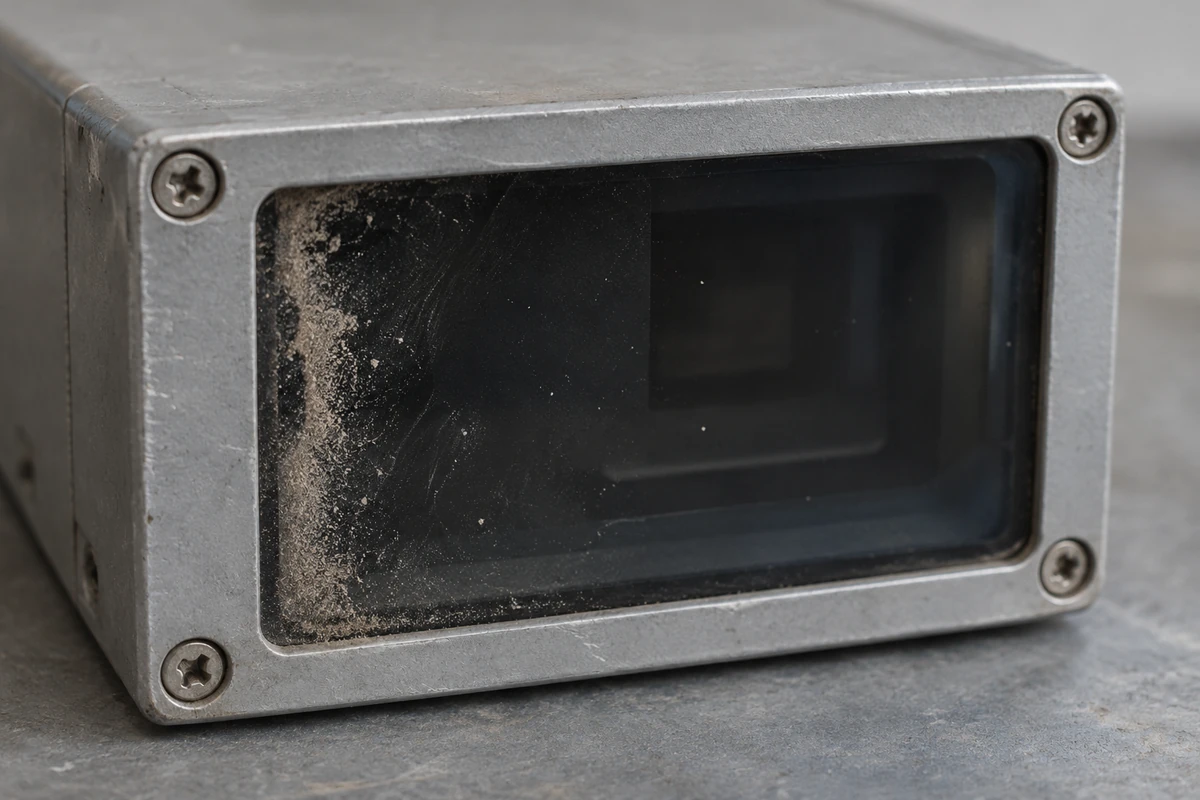
The manufacturer’s Chinese product page describes three contamination states. Their definitions refer to where contamination is detected relative to the configured measurement and ignored regions. Preserve those definitions when mapping the output into a maintenance log.
| State | Definition on the manufacturer page, translated | Follow-up question |
|---|---|---|
| Clean | No contamination detected across the measurement range | Is the reported state current and associated with the correct configuration? |
| Restricted | Detected contamination lies in an ignored region | Which region is ignored, and is that configuration appropriate to this task? |
| Dirty | Contamination detected in a relevant region | What does the authorized maintenance/quality procedure require for this condition? |
“Clean” is a detection result under a configuration. It does not document the cleaning history, a calibration result or acceptance of the measured product. Likewise, the word “restricted” should remain visible in the log; it is not interchangeable with “clean.”
Record the raw value and the translated display label together. If a control system presents only a generic fault, ask the integration owner which original condition it represents. The industrial interface comparison helps separate the physical link, protocol and application-level interpretation, rather than assuming an Ethernet connection establishes the meaning of every field.
Common mistake: Closing a measurement complaint because the diagnostic display says “clean,” without retaining the measurement configuration and quality evidence.
Takeaway: A contamination state answers a diagnostic question; it does not replace a measurement acceptance decision.
How should protective glass enter the equipment record?
Record the exact version and its window arrangement before using a general statement about protection. The C.ODC setup guide distinguishes base, PG and PGA model variants. Its environmental section also places conditions on the stated ingress protection and explicitly separates enclosure protection from the optical path during operation.
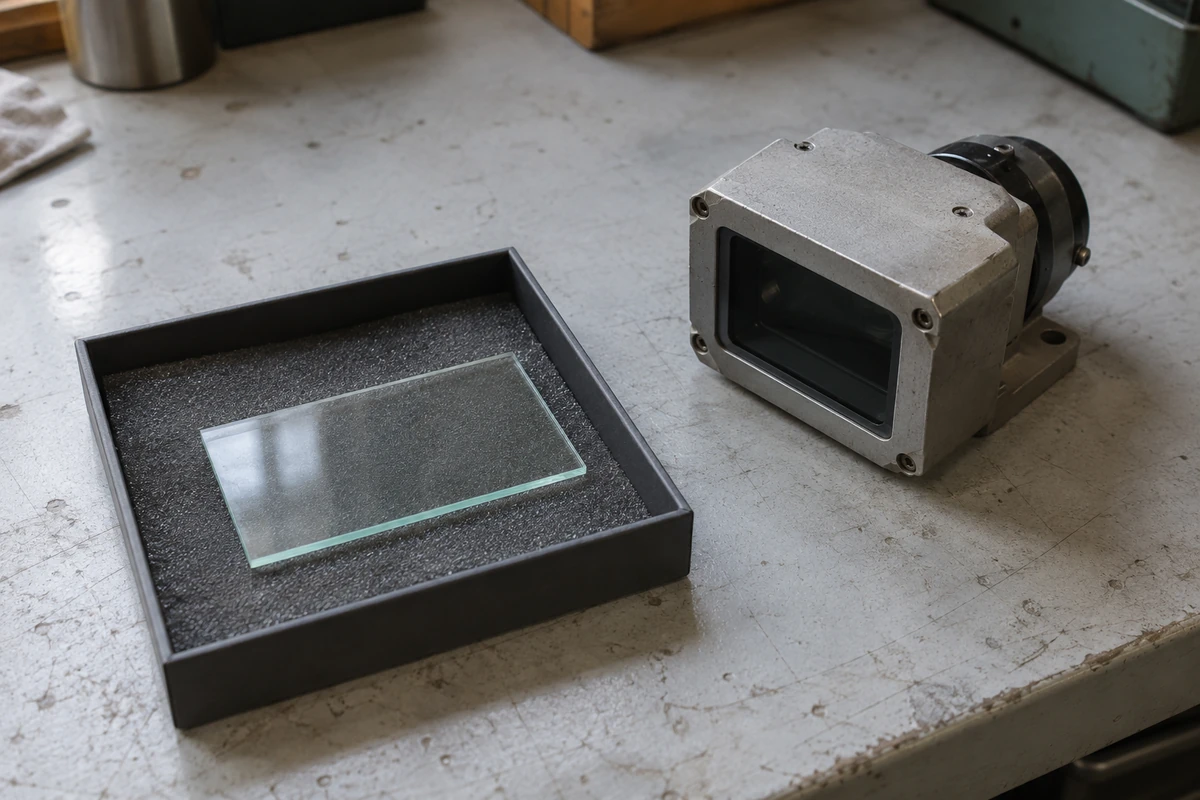
The setup guide states IP67 with protective glasses and connected cables. It says that rating does not apply to the optical paths during operation, and that oil, vapor and emulsions require separate evaluation. Those conditions are part of the claim, not optional footnotes to remove when copying the rating into a plant asset register.
The guide also warns that unsuitable cleaning methods or agents can scratch protective windows and lead to inaccurate or incorrect measurements. Keep the applicable instruction available to authorized staff and refer uncertainties about cleaning materials to the manufacturer.
| Record field | What belongs there | What remains to be confirmed |
|---|---|---|
| Version and serial identity | Actual label and ordered configuration | Whether the glass option is fitted |
| Window condition | Visible observation with an equipment reference | Whether the observation explains the measurement complaint |
| Applicable instruction | Document title and revision | Approved inspection and cleaning method for that version |
| Measurement consequence | Plant’s documented acceptance/recheck requirements | Effect of the actual window and operating conditions |
Use the component identity guide to retain complete model strings. Use the document condition checklist to record the limits attached to a specification rather than copying only its headline.
Takeaway: Preserve the window option and environmental conditions alongside the protection rating.
What should the air-purge review include?
Treat the purge system as a documented support service for the fitted option. Section 2.3 of the setup guide identifies the PGA versions and specifies purge-air purity. Identify that version-specific requirement in the pneumatic record before reviewing the installed supply.
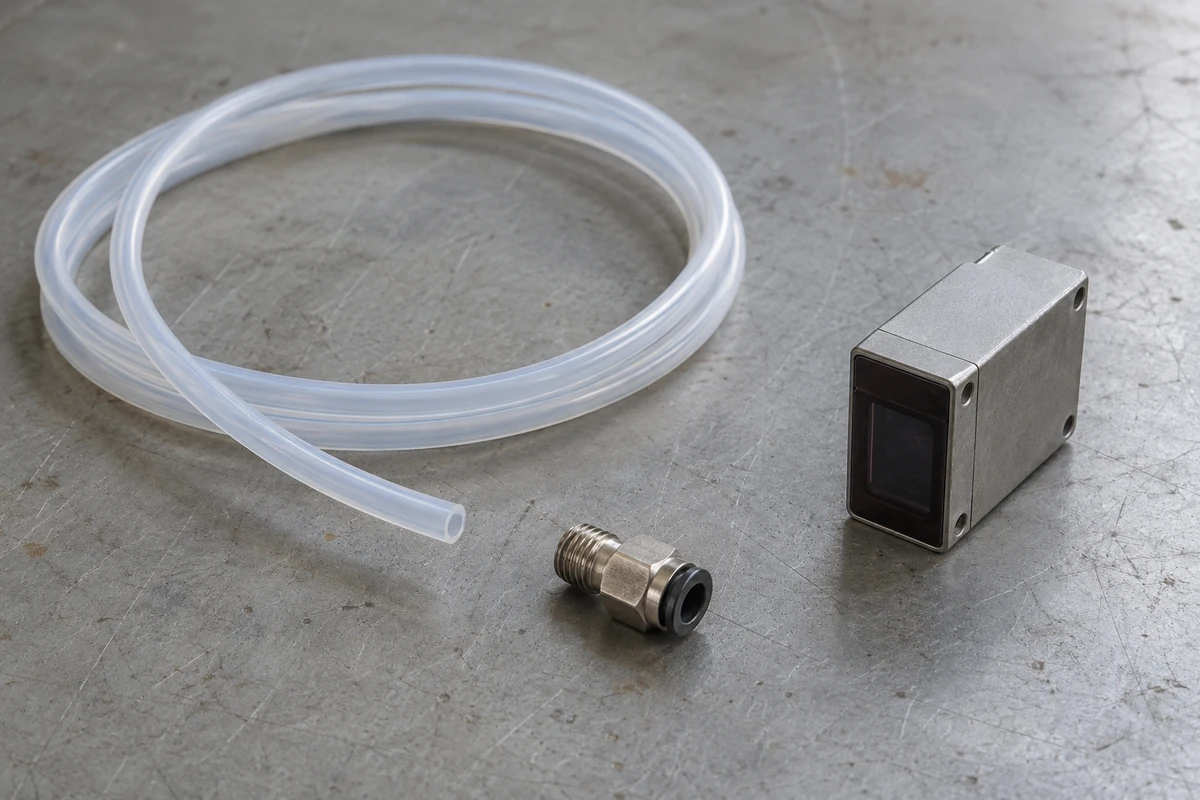
The guide specifies DIN ISO 8573-1:2010 [1:4:2] for purge-air purity and warns against compressor-oil deposits on the glass. Confirm the actual supply against the complete current instruction with the responsible maintenance owner. Retain the instruction revision beside the supply record.
| Question for the maintenance owner | Document or observation to retain |
|---|---|
| Is the installed unit a purge-equipped version? | Exact model record and option documentation |
| Which instruction governs its pneumatic supply? | Applicable setup guide and revision |
| What evidence covers air quality at the supply point? | Plant’s relevant air-service record |
| What was observed when the diagnostic state changed? | Timestamped state and support-service observations |
| Who authorizes inspection and return to operation? | Existing plant procedure and responsible owner |
Keep these entries with the equipment observation record. Correlate the diagnostic change and the air-service observation by their timestamps before assigning the investigation to an owner.
Takeaway: Attach the fitted-option identity, instruction revision and air-service evidence to the maintenance entry.
Who needs the information, and when should they act?
Maintenance, quality and controls staff need different parts of the same record. Start by preserving the state and configuration, then obtain the relevant instruction and decide the plant’s response. For a US project, technical evaluation and supplier availability are separate tasks.
| Reader | Impact of the reported features | Output | Basis |
|---|---|---|---|
| Maintenance owner | Window condition and purge support become specific review fields | Equipment-condition entry and applicable instruction | Product material and setup guide |
| Quality engineer | Diagnostic state needs separation from dimensional acceptance | Documented disposition/recheck decision | Scope of the diagnostic claim |
| Controls integrator | Display label needs a traceable source field | Output mapping and configuration reference | Manufacturer’s state reporting |
| Procurement reviewer | Ordered protection option needs exact identity | Version-specific documentation and supply response | Variant distinctions in setup guide |
| Date or trigger | Action/event | Source or owner | Nature |
|---|---|---|---|
| October 6, 2026 | News coverage of C.ODC | Instrumentation Monthly | Report of the product announcement |
| Diagnostic change or measurement complaint | Preserve state and configuration; apply plant procedure | Maintenance / quality owner | Site action; no universal interval |
| Planned US procurement | Confirm exact version and current supply terms | Actual supplier | Availability date to be confirmed |
For receiving documentation, follow the sourcing evidence route; for a proposed substitute, the replacement review keeps functional equivalence as a separate decision.
Takeaway: Assign diagnostic interpretation, product acceptance and procurement to their own responsible reviewers.
What is still uncertain, and when does this checklist not apply?
The public feature descriptions do not establish the effect of protective glass on accuracy for a particular setup, the response under the plant’s contamination conditions or a US delivery date. Ask the manufacturer for applicable option documentation and the quality owner for the evidence required by the actual process.
| Open point | Owner | Evidence needed |
|---|---|---|
| Glass-related measurement effect | Manufacturer / quality owner | Applicable performance conditions and evaluation evidence |
| State interpretation in the installation | Controls owner | Actual configuration and output mapping |
| Material-specific acceptance | Quality/process owner | Requirements and relevant measurement evaluation |
| US version availability | Supplier | Dated exact-model response |
This checklist does not instruct staff to open a housing, clean an energized sensor, adjust a purge system or release product. It is also not a performance comparison with another gauge. Apply the actual manufacturer’s instructions and authorized plant procedure to those decisions.
Takeaway: Use the checklist to assemble a review record, without turning a protection feature into an accuracy guarantee.
Methods and sources
The feature definitions come from Micro-Epsilon’s original Chinese product page, translated for this article, plus its English C.ODC datasheet and setup guide, read October 9, 2026. The setup guide’s environmental section and pneumatic-supply section provide the specific limits cited here. Instrumentation Monthly supplies the October 6 news context. The maintenance tables are editorial worksheets, not a manufacturer’s prescribed procedure or a record of measurements by this publication.
Related reading
- Sensor output documentation — Relate a reported state to the control system’s interpretation.
- Equipment observation record — Preserve observations and route unresolved questions to an owner.